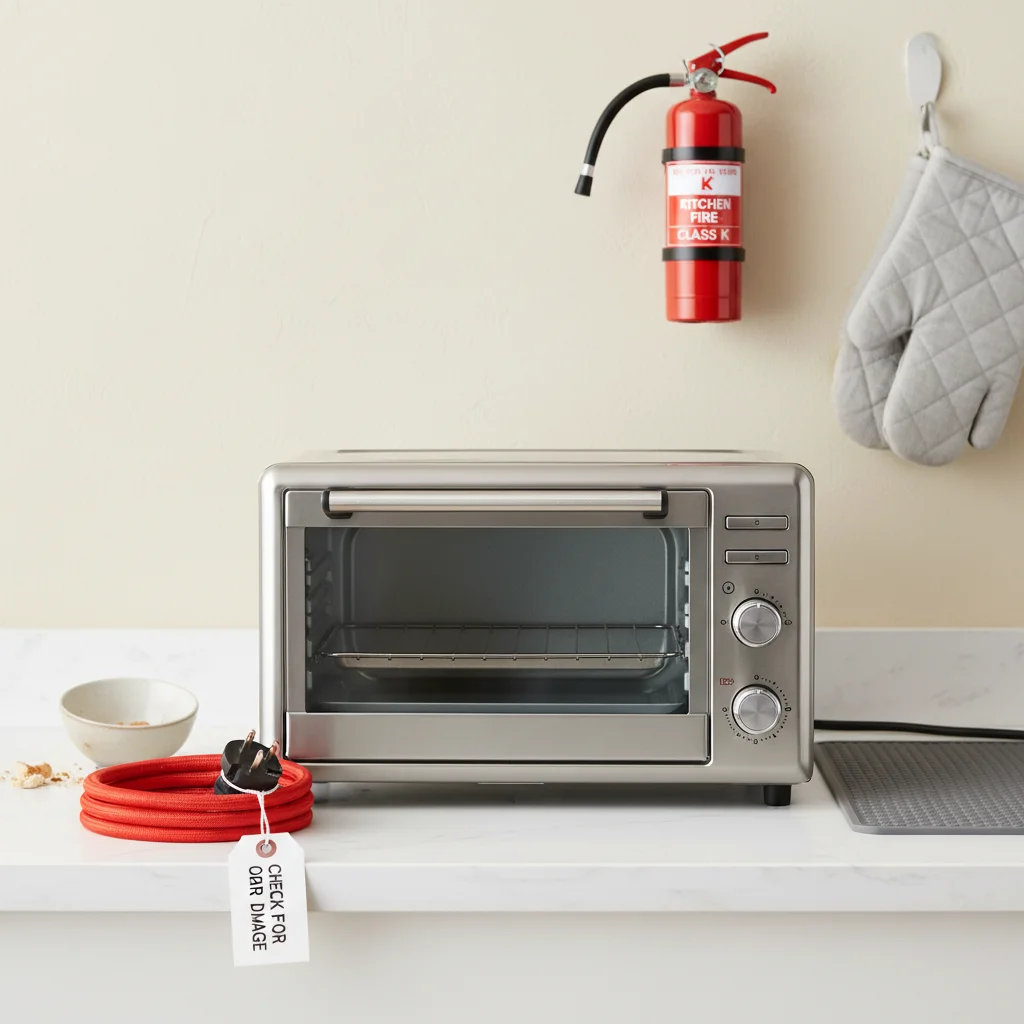
Ensuring toaster oven safety is paramount for preventing kitchen accidents and maintaining a secure home environment. There are five critical safety tips that every user should follow to minimize risks associated with these versatile appliances, including proper placement, regular cleaning, and safe electrical practices.
Understanding Common Toaster Oven Hazards
Toaster ovens, while convenient, can pose several hazards if not used correctly. Overheating is a common issue, often caused by improper ventilation or leaving the appliance unattended. Electrical shorts can occur from damaged cords or water exposure, leading to potential fires or shocks. Food particles accumulating inside can also ignite, especially if the oven is not cleaned regularly. Being aware of these potential dangers is the first step in preventing them.
Proper Placement and Ventilation
The location of your toaster oven is crucial for safe operation. Always place it on a heat-resistant, stable surface, away from flammable materials such as curtains, paper towels, and plastic items. Ensure there is adequate clearance on all sides – typically at least 4-6 inches – to allow for proper heat dissipation. Blocking vents can lead to overheating and fire hazards. Never place anything on top of the toaster oven while it’s in use.
Regular Cleaning and Maintenance
|
Our Picks for the Best Toaster Oven in 2026
As an Amazon Associate I earn from qualifying purchases.
|
||
| Num | Product | Action |
|---|---|---|
| 1 | Hamilton Beach 6 Slice Countertop Toaster Oven With Easy Reach Roll-Top Door, Bake, Broil & Toast Functions, Auto Shutoff, Silver (31127D) |

|
| 2 | BLACK+DECKER Crisp 'N Bake Air Fry Countertop Convection Toaster Oven, Medium Capacity, 4-Slice, 5-in-1, Fits 9” Pizza, 30-Min Timer, Bake, Broil, Air Fry, Toast, Keep Warm, Stainless Steel |
|
| 3 | Cuisinart Custom Classic Toaster Oven Broiler, 1800 Watt Countertop Toaster Oven to Bake, Broil, and Toast, Non-Stick Interior, Consistent Toast Control, Brushed Stainless Steel/Black, TOB-40N |
|
| 4 | BLACK+DECKER TO1313SBD Toaster Oven, 15.47 Inch, Silver |
|
| 5 | BLACK+DECKER Crisp 'N Bake Air Fryer Countertop Convection Toaster Oven, Large Capacity, 6-Slice, 5-in-1, Fits 12” Pizza, 60-Min Timer, Bake, Broil, Air Fry, Toast, Keep Warm, Stainless Steel |
|
| 6 | Oster 10 Function Air Fryer Oven Toaster Oven Countertop |
|
| 7 | BLACK+DECKER TO3250XSBD 8-Slice Extra Wide Convection Countertop Toaster Oven, Includes Bake Pan, Broil Rack & Toasting Rack, Stainless Steel/Black |
|
| 8 | Hamilton Beach 6 Slice Convection Toaster Oven With Easy Reach Roll-Top Door, Bake, Broil & Toast Functions, Auto Shutoff, Silver (31123DA) |
|
| 9 | TOSHIBA AC25CEW-BS Large 6-Slice Convection Toaster Oven Countertop, 10-In-One with Toast, Pizza and Rotisserie, 1500W, Black Stainless Steel, Includes 6 Accessories |
|
| 10 | BLACK+DECKER 4-Slice Toaster Oven with Natural Convection, Stainless Steel, TO1760SS (TO1760SST-1) |
|
A clean toaster oven is a safe toaster oven. Food crumbs, grease, and spills can accumulate and become fire hazards. Make it a habit to clean the crumb tray after every use and wipe down the interior regularly. Disconnect the appliance from the power outlet before cleaning. Avoid using abrasive cleaners that can damage the interior coating. A well-maintained toaster oven not only operates more safely but also more efficiently.
Safe Usage Practices
Always follow the manufacturer’s instructions for your specific toaster oven model. Never leave the appliance unattended while it’s operating, especially when toasting bread or cooking fatty foods. Use oven mitts when handling hot trays and food to prevent burns. Avoid using aluminum foil unless explicitly stated as safe by the manufacturer, and never let it touch the heating elements. Overloading the toaster oven can also lead to uneven cooking and potential hazards.
Electrical Safety and Cord Management
Inspect the power cord regularly for any signs of damage, such as fraying or cracks. Never use a toaster oven with a damaged cord. Plug the appliance directly into a wall outlet; avoid using extension cords, as they can overheat and cause fires. If you notice any unusual smells, sparks, or smoke, immediately unplug the toaster oven and have it inspected by a qualified technician. Proper electrical safety is non-negotiable for preventing accidents.
- Always unplug when not in use or before cleaning.
- Never use metal utensils inside the toaster oven.
- Keep children and pets away from the hot appliance.
- Ensure food items are not touching heating elements.
- Have a fire extinguisher readily available in the kitchen.
Frequently Asked Questions
What are the most common hazards associated with toaster ovens?
The most common hazards associated with toaster ovens include overheating due to improper ventilation, electrical shorts from damaged cords, and fires caused by accumulated food particles. Leaving the appliance unattended is a significant risk factor for these issues.
How much clearance is needed around a toaster oven for safe operation?
For safe operation, a toaster oven requires adequate clearance on all sides, typically at least 4-6 inches, to allow for proper heat dissipation. This prevents overheating and reduces the risk of fire hazards from nearby flammable materials.
How often should I clean my toaster oven to ensure safety?
You should clean the crumb tray of your toaster oven after every use and wipe down the interior regularly to prevent the accumulation of food crumbs, grease, and spills. Disconnecting the appliance before cleaning is also a critical safety measure.
Can I use aluminum foil inside my toaster oven?
You should avoid using aluminum foil inside your toaster oven unless the manufacturer explicitly states it is safe for your specific model. Never allow aluminum foil to touch the heating elements, as this can create a fire hazard.
What should I do if my toaster oven shows signs of electrical damage?
If your toaster oven shows signs of electrical damage, such as fraying cords, unusual smells, sparks, or smoke, immediately unplug the appliance. Do not use it again until it has been inspected and repaired by a qualified technician.

I’m so glad I read this before setting up my new toaster oven! The tip about proper placement and ventilation really hit home. I was about to put it right under my cabinet, but now I know to give it more space. It’s such a simple thing but could prevent a big problem.
This was a really helpful read. I’ve always worried about electrical shorts, especially with older appliances. The reminder about checking cords for damage and avoiding water exposure is something I’ll definitely be more diligent about now. It’s easy to overlook these things in a busy kitchen.
As someone who uses a toaster oven daily, I appreciate the focus on preventing overheating. I’ve definitely left mine on longer than I should have a few times. Being more mindful of not leaving the appliance unattended is a great takeaway for me. Safety first!
Good info here, especially about cleaning. I’ve been pretty bad about getting those food particles out, and it makes sense that they could cause a fire. My only minor complaint is that I wish there was a bit more detail on what kind of cleaning products are safe to use inside.