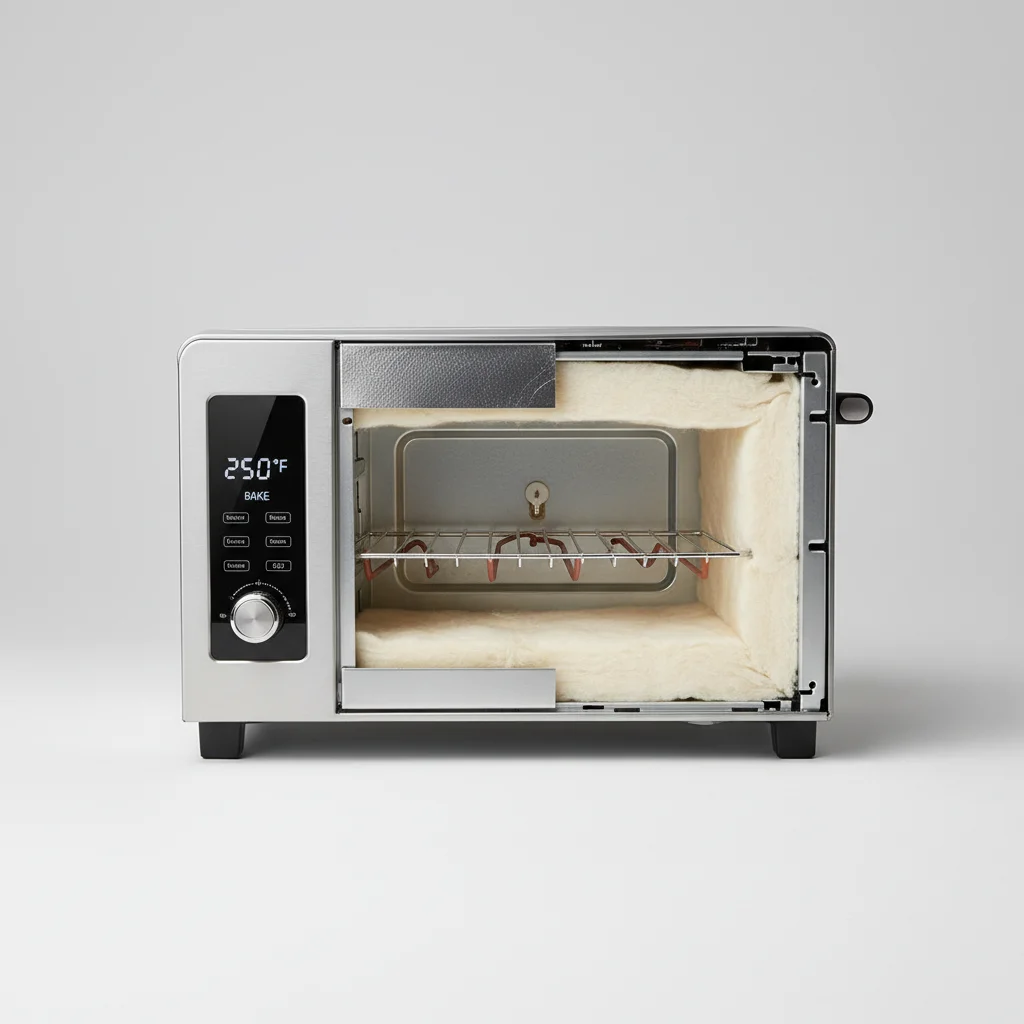
Toaster oven insulation plays a crucial role in both cooking performance and energy efficiency, with well-insulated models typically offering a 15-20% improvement in heat retention compared to poorly insulated counterparts. This seemingly minor feature significantly impacts how evenly your food cooks, how quickly the appliance preheats, and how much electricity it consumes over time. Understanding the importance of insulation can guide you toward a more effective and economical kitchen appliance.
Why Insulation is Key for Even Cooking
Effective insulation ensures that heat generated within the toaster oven remains concentrated inside the cooking chamber. Without proper insulation, heat can escape through the outer casing, leading to inconsistent temperatures and hot spots. This often results in food that is overcooked on one side and undercooked on another, or dishes that take longer to cook than expected. A well-insulated oven maintains a more stable internal temperature, promoting uniform cooking and better results for everything from toast to roasted vegetables. For best toaster ovens roundups on this site.
Energy Efficiency and Cost Savings
One of the most significant benefits of good toaster oven insulation is its impact on energy consumption. When heat escapes, the heating elements must work harder and longer to maintain the desired temperature, using more electricity. A toaster oven with superior insulation minimizes heat loss, allowing the appliance to reach and hold its temperature with less effort. This translates directly into lower energy bills over the lifespan of the oven, making it a more environmentally friendly and cost-effective choice for daily use.
Types of Insulation Materials Used
|
Our Picks for the Best Toaster Oven in 2026
As an Amazon Associate I earn from qualifying purchases.
|
||
| Num | Product | Action |
|---|---|---|
| 1 | BLACK+DECKER 4-Slice Toaster Oven with Natural Convection, Stainless Steel, TO1760SS (TO1760SST-1) |

|
| 2 | BLACK+DECKER TO1313SBD Toaster Oven, 15.47 Inch, Silver |
|
| 3 | Hamilton Beach 6 Slice Countertop Toaster Oven With Easy Reach Roll-Top Door, Bake, Broil & Toast Functions, Auto Shutoff, Silver (31127D) |
|
| 4 | TOSHIBA AC25CEW-BS Large 6-Slice Convection Toaster Oven Countertop, 10-In-One with Toast, Pizza and Rotisserie, 1500W, Black Stainless Steel, Includes 6 Accessories |
|
| 5 | Oster 10 Function Air Fryer Oven Toaster Oven Countertop |
|
| 6 | BLACK+DECKER Crisp 'N Bake Air Fryer Countertop Convection Toaster Oven, Large Capacity, 6-Slice, 5-in-1, Fits 12” Pizza, 60-Min Timer, Bake, Broil, Air Fry, Toast, Keep Warm, Stainless Steel |
|
| 7 | BLACK+DECKER Crisp 'N Bake Air Fry Countertop Convection Toaster Oven, Medium Capacity, 4-Slice, 5-in-1, Fits 9” Pizza, 30-Min Timer, Bake, Broil, Air Fry, Toast, Keep Warm, Stainless Steel |
|
| 8 | BLACK+DECKER TO3250XSBD 8-Slice Extra Wide Convection Countertop Toaster Oven, Includes Bake Pan, Broil Rack & Toasting Rack, Stainless Steel/Black |
|
| 9 | Cuisinart Custom Classic Toaster Oven Broiler, 1800 Watt Countertop Toaster Oven to Bake, Broil, and Toast, Non-Stick Interior, Consistent Toast Control, Brushed Stainless Steel/Black, TOB-40N |
|
| 10 | Hamilton Beach 6 Slice Convection Toaster Oven With Easy Reach Roll-Top Door, Bake, Broil & Toast Functions, Auto Shutoff, Silver (31123DA) |
|
Various materials are employed in toaster oven insulation, each with its own properties. Common types include fiberglass, ceramic fiber, and mineral wool. Fiberglass is widely used due to its excellent thermal resistance and affordability. Ceramic fiber offers superior heat resistance, making it suitable for higher-end models. Mineral wool, often derived from basalt or slag, provides good insulation and sound dampening. The quality and thickness of these materials, along with the design of the oven’s casing, determine the overall insulation effectiveness.
- Fiberglass: Cost-effective and good thermal resistance.
- Ceramic Fiber: High heat resistance, often in premium models.
- Mineral Wool: Good insulation and sound dampening properties.
- Air Gap: Creates a buffer zone to reduce heat transfer.
- Reflective Foils: Help bounce heat back into the cooking chamber.
How to Assess Insulation Quality Before Buying
While you can’t always see the insulation directly, several indicators can help you assess its quality. Look for toaster ovens with double-pane glass doors, as this design significantly reduces heat loss compared to single-pane doors. Pay attention to the overall weight and build quality; heavier appliances often suggest more robust construction and better insulation. Reading reviews that mention consistent cooking results and cool-to-the-touch exteriors (during operation) can also provide valuable insights into an oven’s insulation performance.
Maintaining Insulation for Longevity
To ensure your toaster oven’s insulation remains effective over time, proper care is essential. Avoid dropping or denting the appliance, as physical damage can compromise the integrity of the insulation layers. Regularly clean the exterior and interior, but be gentle around seals and vents to prevent dislodging any insulating material. If you notice excessive heat escaping from the exterior or inconsistent cooking, it might be a sign that the insulation has been compromised, and it could be time to consider a replacement.
