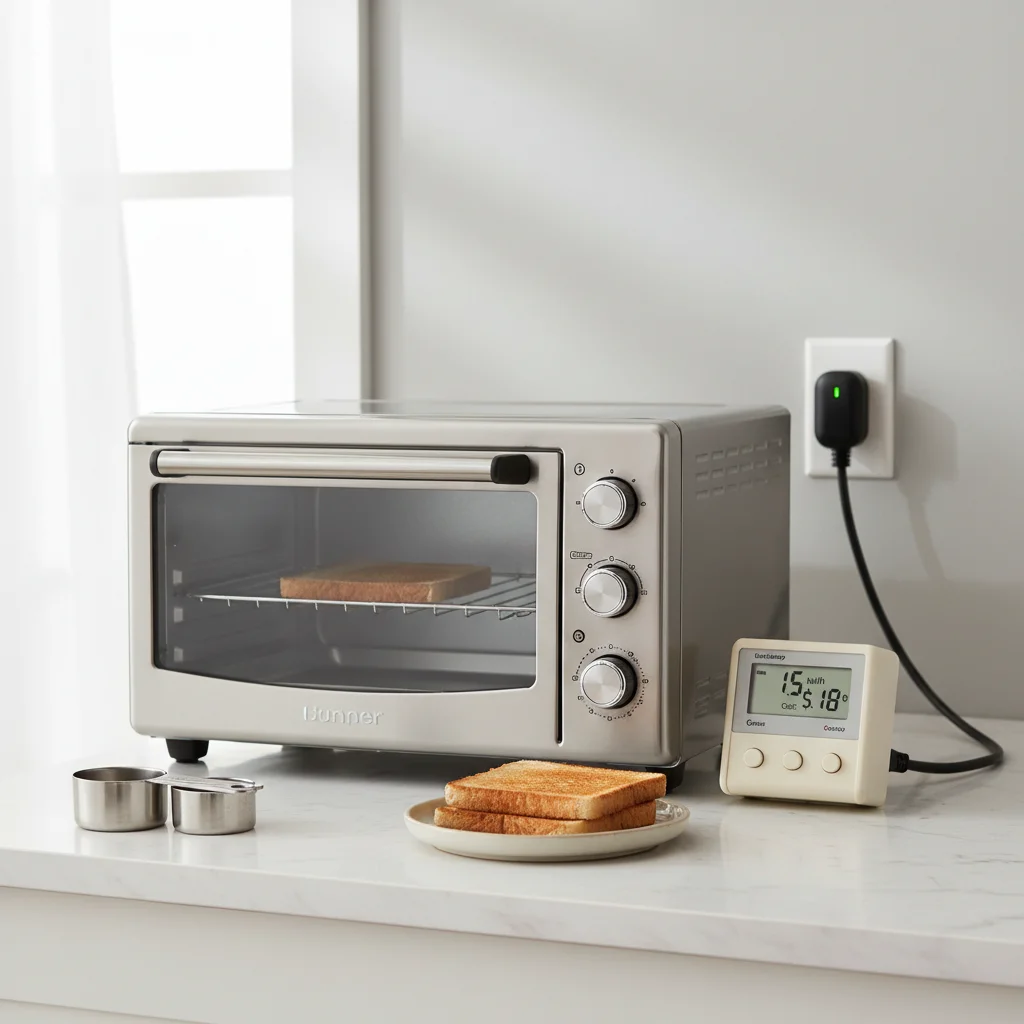
A typical toaster oven consumes between 1200 to 1800 watts, costing approximately $0.15 to $0.25 per hour to operate, depending on local electricity rates. This energy usage and cost fluctuate based on the specific model’s wattage, cooking duration, and frequency of use, making it crucial for managing household utility expenses.
Factors Affecting Toaster Oven Energy Use
Several key factors influence how much energy your toaster oven consumes. The most significant is its wattage; higher wattage models generally use more electricity but can also cook faster, potentially reducing overall usage duration. The type of cooking also plays a role; baking or roasting for extended periods will naturally consume more energy than simply toasting bread. Furthermore, the oven’s insulation quality and age can impact efficiency, with older or poorly insulated models often requiring more power to maintain temperature.
Calculating Your Toaster Oven’s Operating Cost
To accurately calculate your toaster oven’s operating cost, you’ll need three pieces of information: the appliance’s wattage, the number of hours it’s used per month, and your local electricity rate (usually found on your utility bill, expressed in cents per kilowatt-hour or kWh). The formula is straightforward: (Wattage / 1000) * Hours Used * Cost per kWh. For example, a 1500-watt toaster oven used for 10 hours a month with an electricity rate of $0.18/kWh would cost (1500/1000) * 10 * 0.18 = $2.70 per month. This simple calculation helps you budget and identify potential areas for energy savings.
Tips for Reducing Toaster Oven Energy Consumption
Minimizing your toaster oven’s energy footprint doesn’t require drastic changes. One effective strategy is to preheat only when necessary; for many quick tasks, preheating is optional. Utilizing the convection setting, if available, can also reduce cooking times and thus energy use, as it circulates hot air more efficiently. Always ensure the door seal is intact to prevent heat loss, and consider using glass or ceramic bakeware, which can retain heat better and allow for lower cooking temperatures. Finally, unplugging the appliance when not in use eliminates phantom load, a small but continuous draw of electricity.
- Use the convection setting for faster cooking.
- Preheat only when absolutely essential for the recipe.
- Ensure the door seal is tight to prevent heat escape.
- Utilize glass or ceramic dishes for better heat retention.
- Unplug the toaster oven when not in use to avoid phantom drain.
Comparing Toaster Oven Energy to Other Appliances
|
Our Picks for the Best Toaster Oven in 2026
As an Amazon Associate I earn from qualifying purchases.
|
||
| Num | Product | Action |
|---|---|---|
| 1 | BLACK+DECKER TO1313SBD Toaster Oven, 15.47 Inch, Silver |

|
| 2 | Cuisinart Custom Classic Toaster Oven Broiler, 1800 Watt Countertop Toaster Oven to Bake, Broil, and Toast, Non-Stick Interior, Consistent Toast Control, Brushed Stainless Steel/Black, TOB-40N |
|
| 3 | BLACK+DECKER TO3250XSBD 8-Slice Extra Wide Convection Countertop Toaster Oven, Includes Bake Pan, Broil Rack & Toasting Rack, Stainless Steel/Black |
|
| 4 | Hamilton Beach 6 Slice Convection Toaster Oven With Easy Reach Roll-Top Door, Bake, Broil & Toast Functions, Auto Shutoff, Silver (31123DA) |
|
| 5 | BLACK+DECKER 4-Slice Toaster Oven with Natural Convection, Stainless Steel, TO1760SS (TO1760SST-1) |
|
| 6 | BLACK+DECKER Crisp 'N Bake Air Fryer Countertop Convection Toaster Oven, Large Capacity, 6-Slice, 5-in-1, Fits 12” Pizza, 60-Min Timer, Bake, Broil, Air Fry, Toast, Keep Warm, Stainless Steel |
|
| 7 | Hamilton Beach 6 Slice Countertop Toaster Oven With Easy Reach Roll-Top Door, Bake, Broil & Toast Functions, Auto Shutoff, Silver (31127D) |
|
| 8 | TOSHIBA AC25CEW-BS Large 6-Slice Convection Toaster Oven Countertop, 10-In-One with Toast, Pizza and Rotisserie, 1500W, Black Stainless Steel, Includes 6 Accessories |
|
| 9 | BLACK+DECKER Crisp 'N Bake Air Fry Countertop Convection Toaster Oven, Medium Capacity, 4-Slice, 5-in-1, Fits 9” Pizza, 30-Min Timer, Bake, Broil, Air Fry, Toast, Keep Warm, Stainless Steel |
|
| 10 | Oster 10 Function Air Fryer Oven Toaster Oven Countertop |
|
When compared to larger kitchen appliances, a toaster oven is generally more energy-efficient for smaller tasks. A full-sized oven, for instance, consumes significantly more energy to heat a much larger cavity, making it less economical for preparing small meals or snacks. Microwaves are often more efficient for reheating and quick cooking, but they lack the browning and crisping capabilities of a toaster oven. Air fryers, which are essentially compact convection ovens, have similar energy profiles to toaster ovens, often falling within the same wattage range. Choosing the right appliance for the task at hand is key to overall energy savings.
For those looking for an energy-efficient model, consider options with advanced insulation and precise temperature controls. Many modern toaster ovens are designed with energy conservation in mind, offering features that help reduce overall power consumption without compromising performance.These models often come with detailed energy guides, allowing you to make an informed decision based on your usage patterns and energy goals. Investing in a more efficient appliance can lead to long-term savings on your utility bills.
Ultimately, understanding and managing your toaster oven’s energy consumption is a practical step towards a more energy-efficient kitchen. By implementing simple habits and choosing the right appliance for your needs, you can enjoy the convenience of your toaster oven without excessive energy costs.Regular maintenance, such as cleaning the interior and checking the door seal, also contributes to optimal performance and energy efficiency over the appliance’s lifespan.
Frequently Asked Questions
How many watts does a typical toaster oven use?
A typical toaster oven uses between 1200 to 1800 watts. This wattage directly influences its energy consumption and how quickly it can heat up and cook food.
What is the average hourly cost to run a toaster oven?
The average hourly cost to run a toaster oven is approximately $0.15 to $0.25. This figure depends on the appliance's wattage and your local electricity rates, which vary by region.
How can I calculate my toaster oven's monthly operating cost?
You can calculate your toaster oven's monthly operating cost using the formula: (Wattage / 1000) * Hours Used * Cost per kWh. For example, a 1500-watt oven used 10 hours a month at $0.18/kWh costs $2.70.
What factors most affect a toaster oven's energy usage?
The most significant factors affecting a toaster oven's energy usage are its wattage, the duration and type of cooking, and the appliance's insulation quality. Higher wattage and longer cooking times generally increase consumption.
Is a toaster oven more energy-efficient than a full-sized oven?
Yes, a toaster oven is generally more energy-efficient than a full-sized oven for smaller tasks. It heats a much smaller cavity, consuming less energy for preparing small meals or snacks compared to a large oven.
Reduce Toaster Oven Energy Consumption
Minimize your toaster oven's energy footprint and save on utility bills by following these simple steps.
Avoid preheating for quick tasks like toasting bread or reheating small items. Many recipes do not strictly require preheating, saving energy.
If your toaster oven has a convection setting, utilize it. Convection circulates hot air more efficiently, reducing cooking times and overall energy use.
Regularly check that your toaster oven's door seal is intact and tight. A good seal prevents heat loss, allowing the oven to maintain temperature with less power.
Unplug your toaster oven when it's not in use to eliminate phantom load. This small but continuous draw of electricity can add up over time.

I was really curious about the actual cost of running my toaster oven, and this was super helpful. I use mine almost daily for everything from toast to reheating leftovers, and knowing it’s only about $0.15-$0.25 an hour makes me feel a lot better about not always firing up the big oven. It’s definitely a kitchen workhorse for me!
Good info here. I’ve got an older model toaster oven, probably 5+ years old, and I hadn’t really considered that its age might be making it less efficient. I mostly use it for baking small batches of cookies or roasting veggies, so I’m thinking it might be time to look into a newer, better-insulated one to save a bit on the electric bill.
This really clarified things for me! I always assumed my toaster oven was a huge energy hog, but understanding that the cost per hour is relatively low, especially compared to a full-sized oven, is great. I often use it for longer cooking durations, like roasting a small chicken, and now I feel more confident that I’m not racking up a huge bill.
I appreciate the breakdown of wattage and cost, but I wish there was more specific advice on how to choose a new toaster oven based on energy efficiency. My current one is 1500 watts, and while it cooks fast, I’m always wondering if a lower wattage model would actually save me money in the long run, even if it takes a bit longer to cook. It’s a bit of a trade-off.